
Japanese Milk Bread (Hokkaido Style)
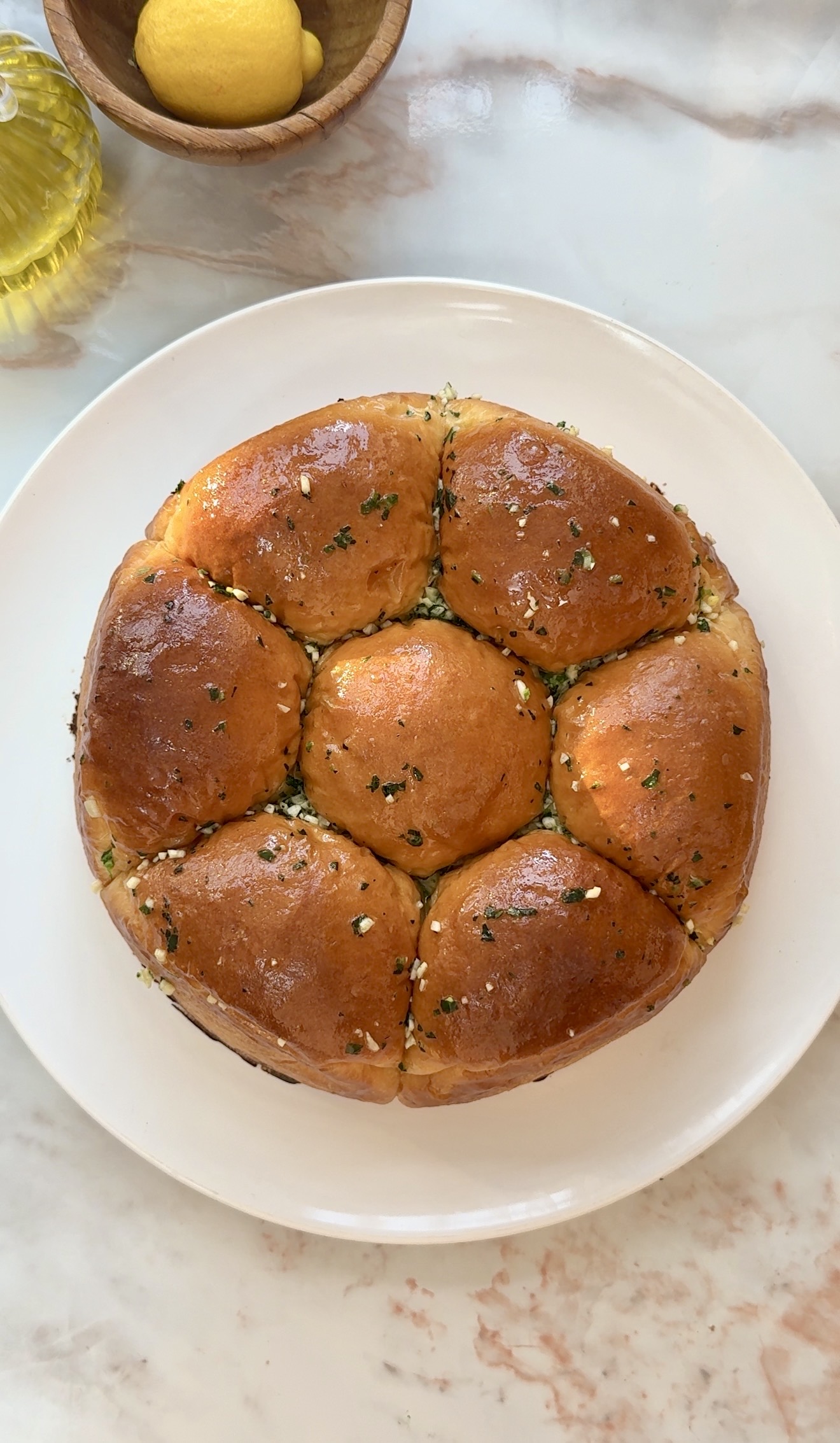
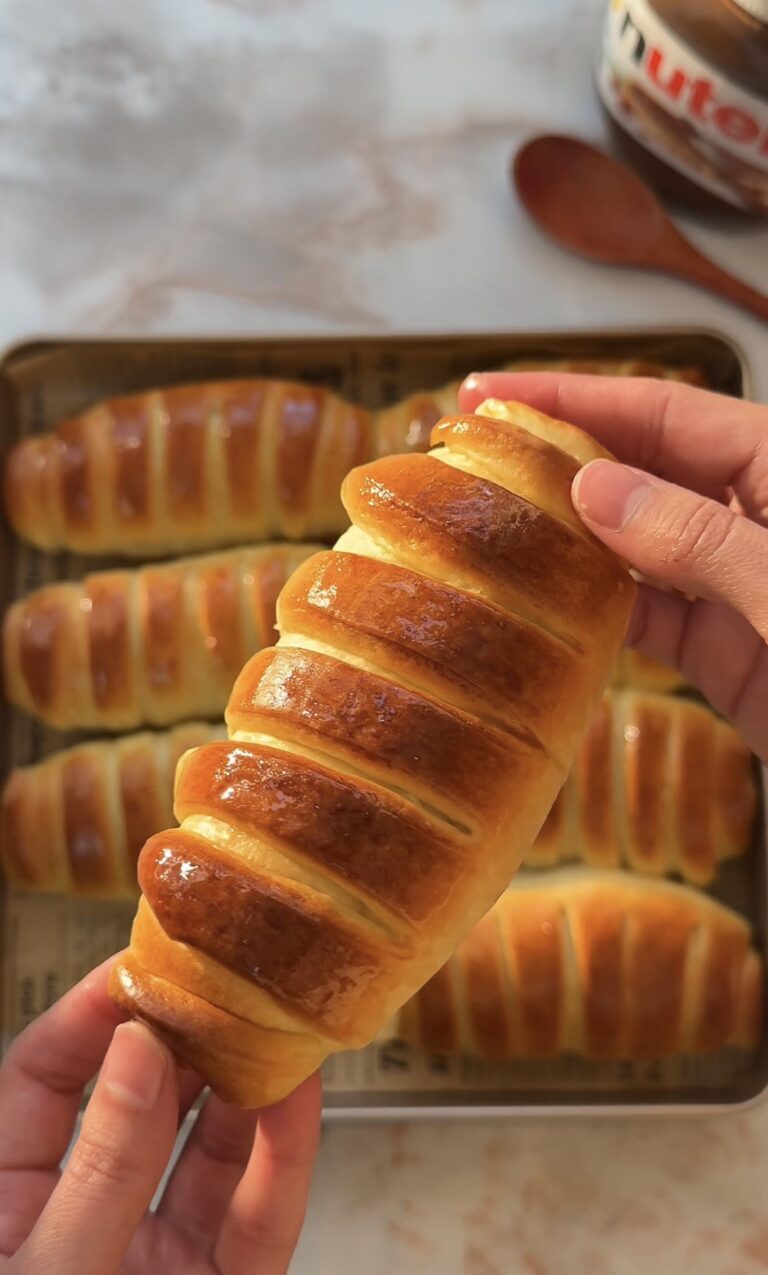
I’ve made a lot of different breads over the years, but nothing comes close to this one. I’ve always wanted to recreate the soft, fluffy Japanese milk bread I fell in love with when I visited Japan in Spring this year. It quickly became my favourite breakfast, and I looked forward to having a slice every morning with Nutella or jam.
If you’ve never tried Japanese milk bread before, I can’t recommend it enough. It’s incredibly light, soft and stays fresh for days. My family absolutely loves it, and it’s one of those recipes I find myself making again and again. It does take a little patience, but I promise it’s worth every minute. Once you’ve baked it yourself, you’ll understand why it’s so popular!
What is Japanese Milk Bread?
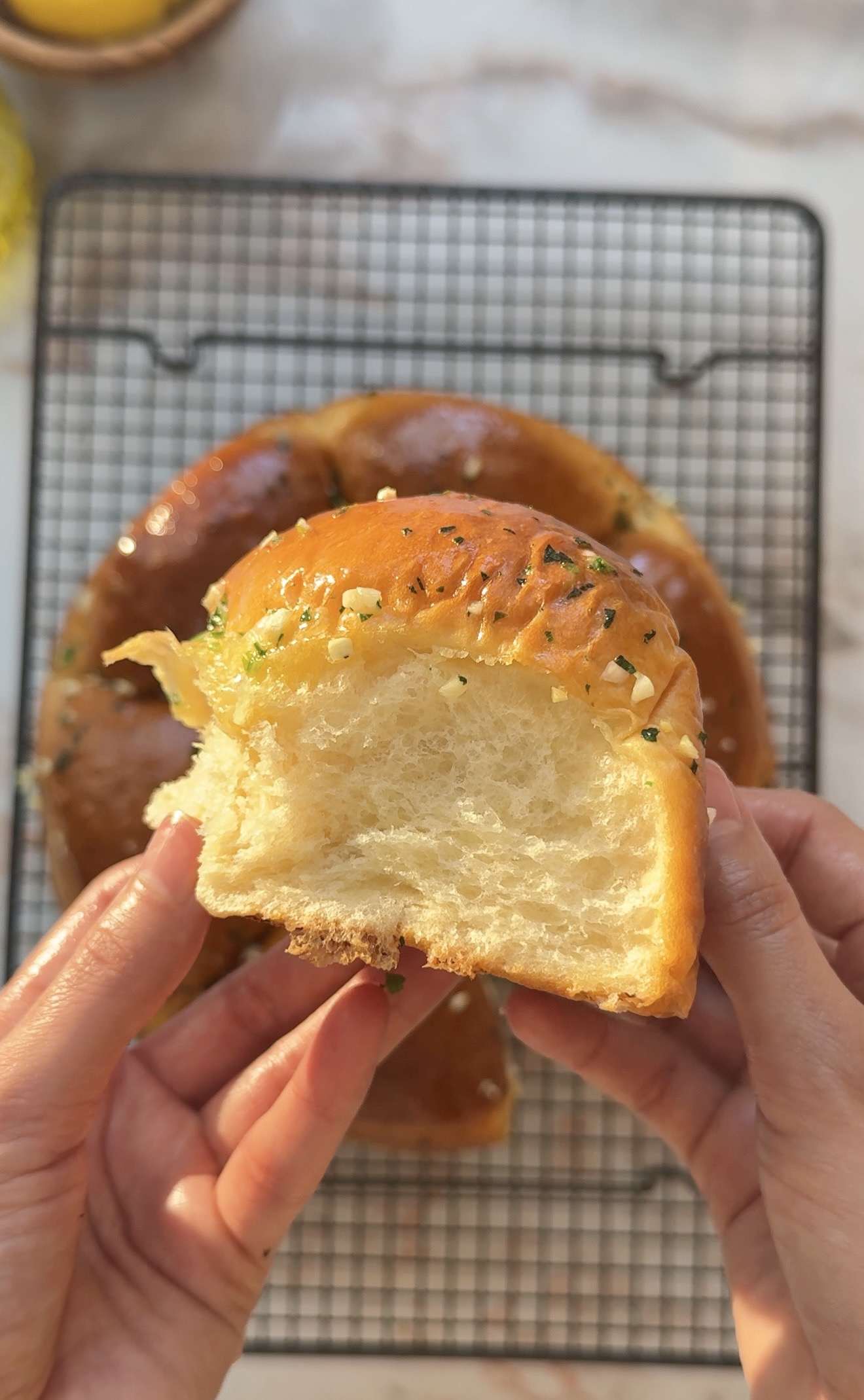
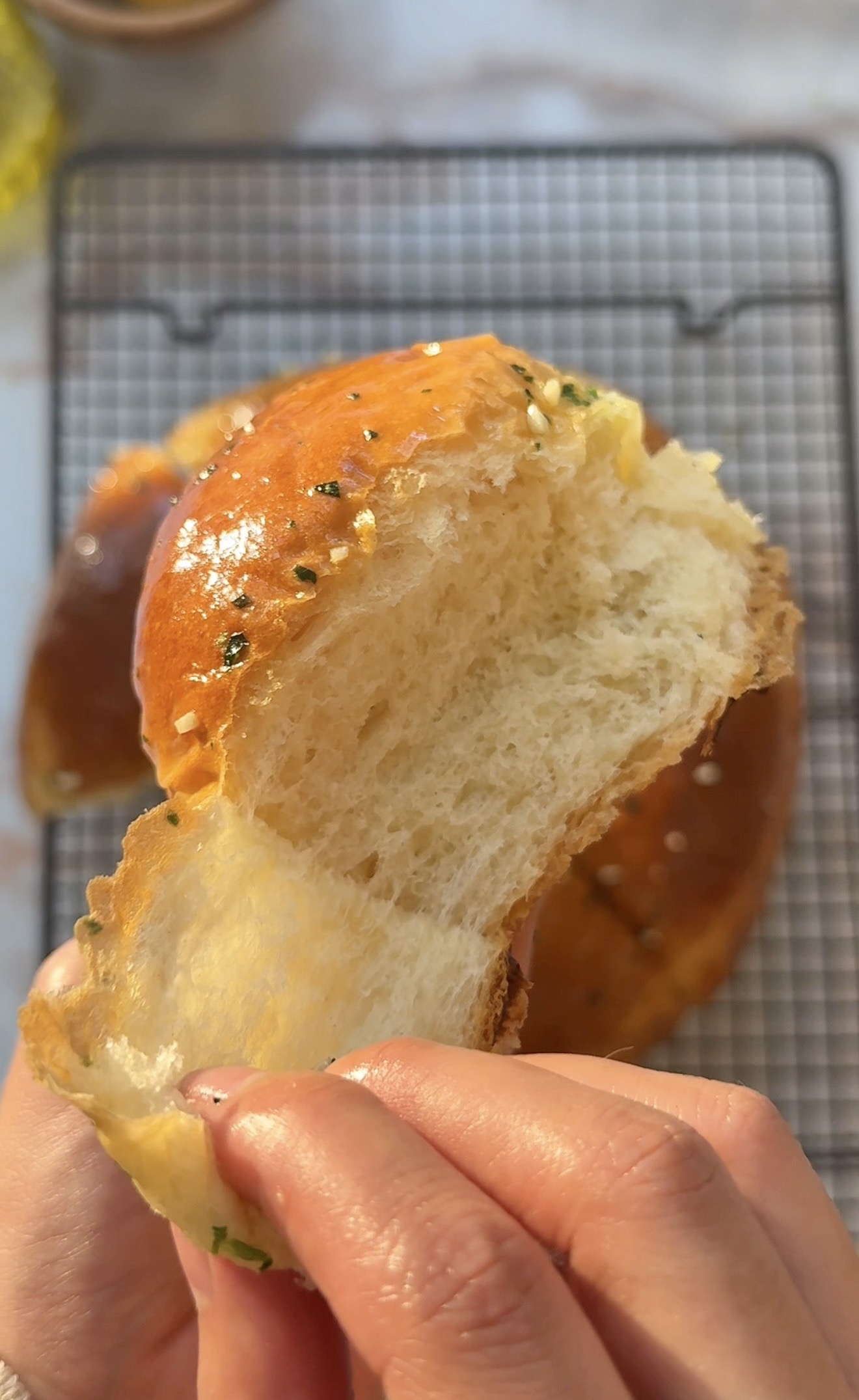
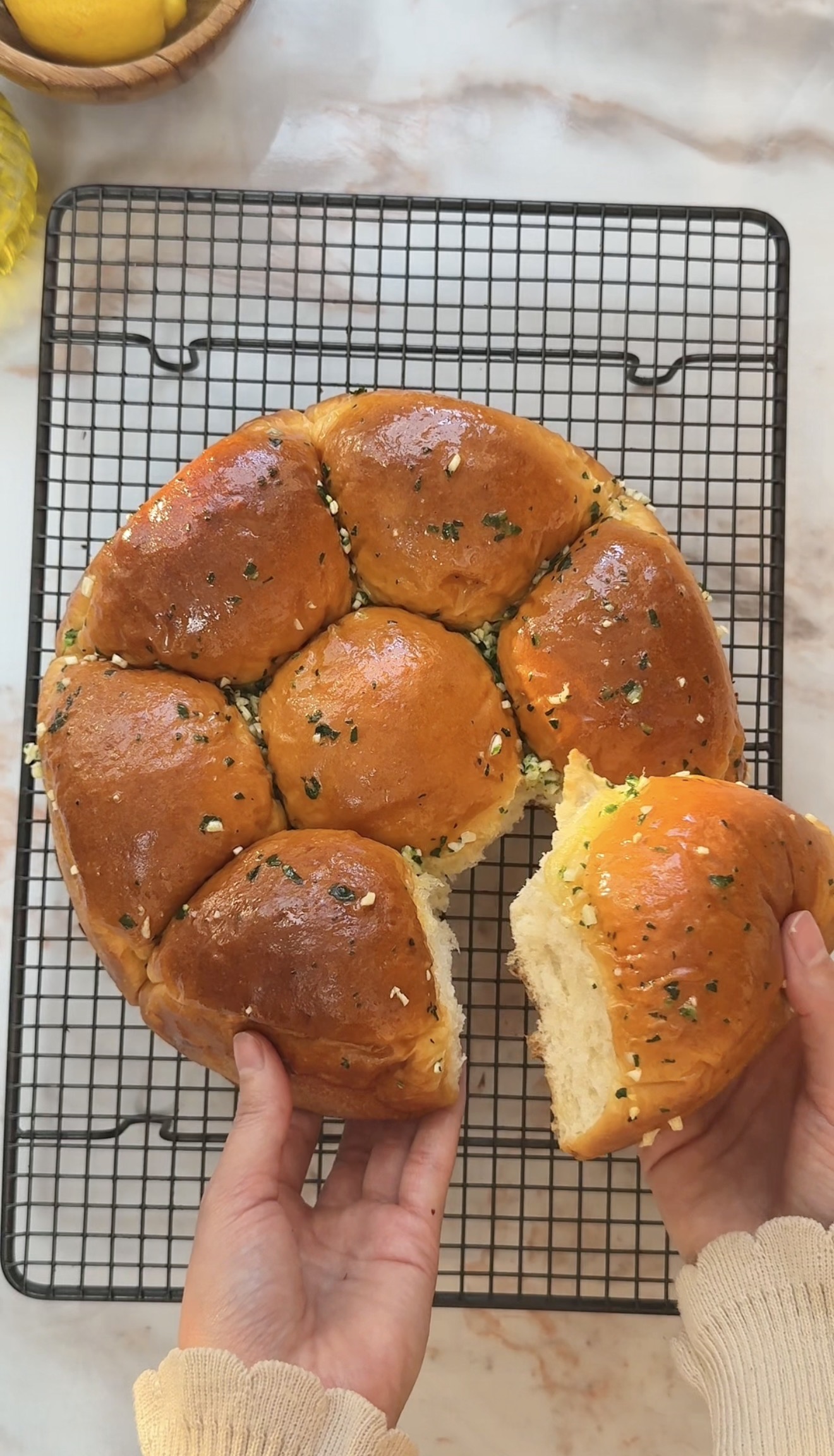
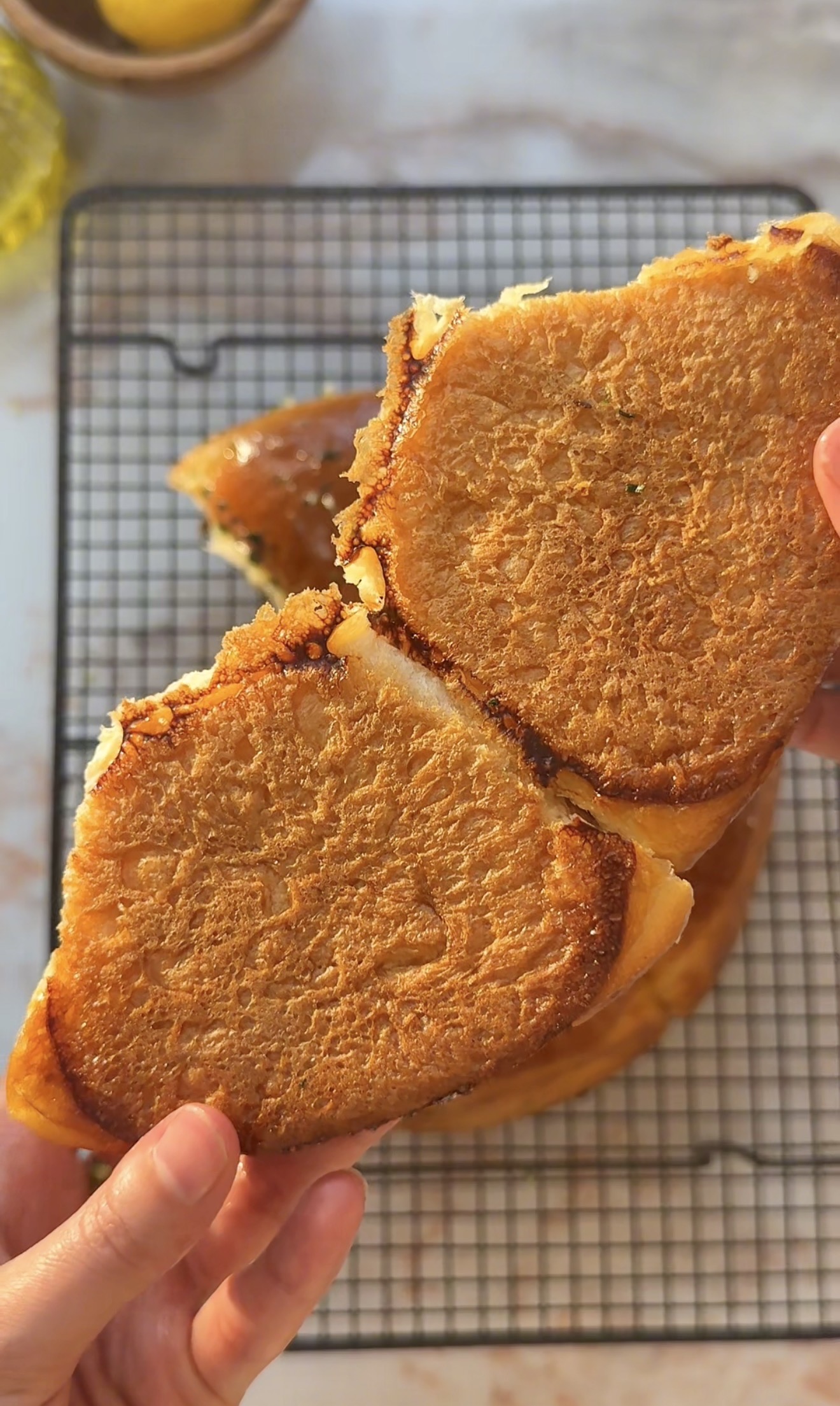
Japanese milk bread, also known as Hokkaido milk bread, is one of the softest, fluffiest loaves you’ll ever try. It has a light, pillowy texture that pulls apart effortlessly with your hands, making every slice incredibly soft and airy.
Unlike a traditional loaf, Japanese milk bread has a rich, tender crumb that almost melts in your mouth. It’s perfect served warm with butter, jam, Nutella, garlic butter or even enjoyed on its own. Once you’ve tried it, you’ll understand why it’s loved by so many people around the world.
So what makes Japanese milk bread so unbelievably soft and fluffy? The secret lies in a special technique called the tangzhong method, which we’ll look at next.
What Is The Tangzhong Method?
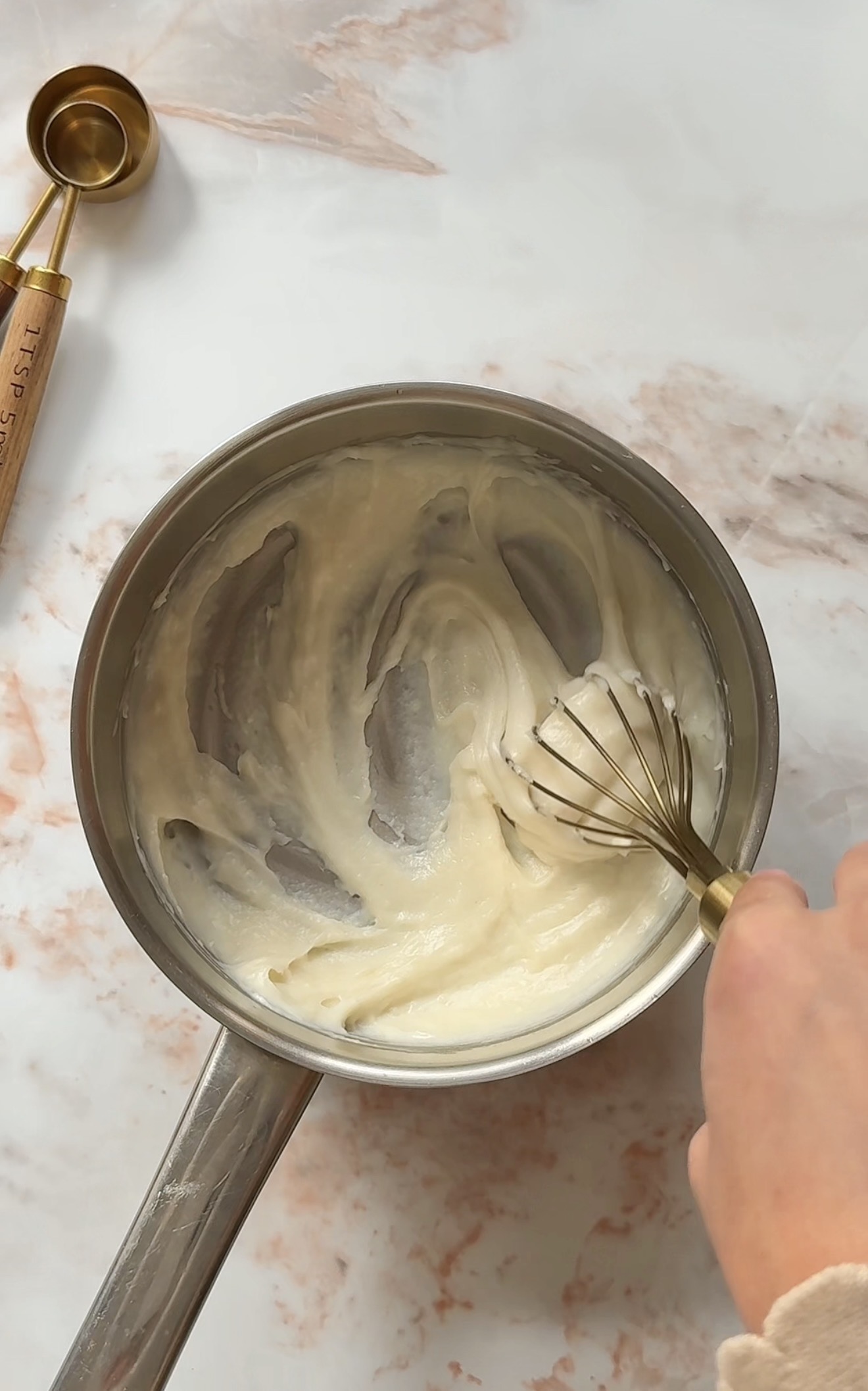
Tangzhong is a simple Japanese bread-making technique where a small portion of the flour and liquid are cooked together until they form a thick paste. This paste is then added into the dough, helping it retain more moisture and creating that soft and fluffy texture. I was honestly amazed the first time I tried this method because the difference in the dough was so noticeable, the bread came out softer and stayed fresh for longer compared to a traditional bread recipe. I definitely think it deserves a place in many other baking recipes too!
Jump to RecipeWhy You’ll Love These Japanese Milk Rolls
- The tangzhong method, a Japanese baking technique that creates the softest, most tender crumb possible
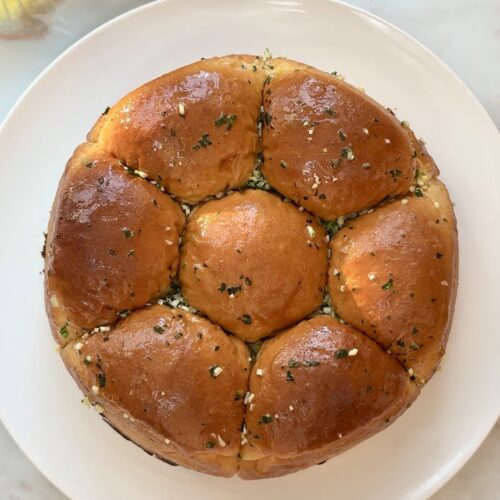
- Pull-apart rolls, I baked them in a springform pan so each roll touches and pulls apart beautifully at the table
- Condensed milk in the dough, adds a subtle sweetness and extra softness you won’t find in a standard bread recipe
- Garlic butter finish. I brushed over hot rolls straight from the oven for the most incredible flavour (but you can skip this)
- Stays soft for days, unlike regular homemade bread, the tangzhong keeps these rolls soft and fresh much longer
Ingredients You’ll Need
For the Tangzhong
- 25g bread flour
- 125g whole milk
Dough
- 375g bread flour — bread flour gives more structure and chew than plain flour
- 25g sugar — a gentle sweetness throughout the dough
- 15g milk powder — boosts the milky flavour and adds softness
- 4g instant yeast — fast-action yeast works perfectly here
- 6g salt — add this after the initial mix, not at the start with the yeast
- 140g milk + 60g cream — the combination of both gives a richer dough than milk alone
- 35g condensed milk — adds sweetness, softness, and a slight caramel note
- 1 egg (50g) — enriches the dough and adds colour
- 40g unsalted butter, softened — kneaded in gradually for that classic enriched bread texture
Garlic Butter Finish
- 50g butter, melted
- 4 small garlic cloves, finely grated
- 1-2 tsp fresh parsley, chopped
- Pinch of salt
How to Make Japanese Milk Bread
1. Start with the tangzhong. In a small saucepan over low heat, whisk together the 25g bread flour and 125g whole milk until no lumps remain. Cook, stirring constantly, until the mixture thickens into a smooth, pudding-like paste. This takes about 3-5 minutes on low heat. Remove from the heat and set aside to cool completely before using.
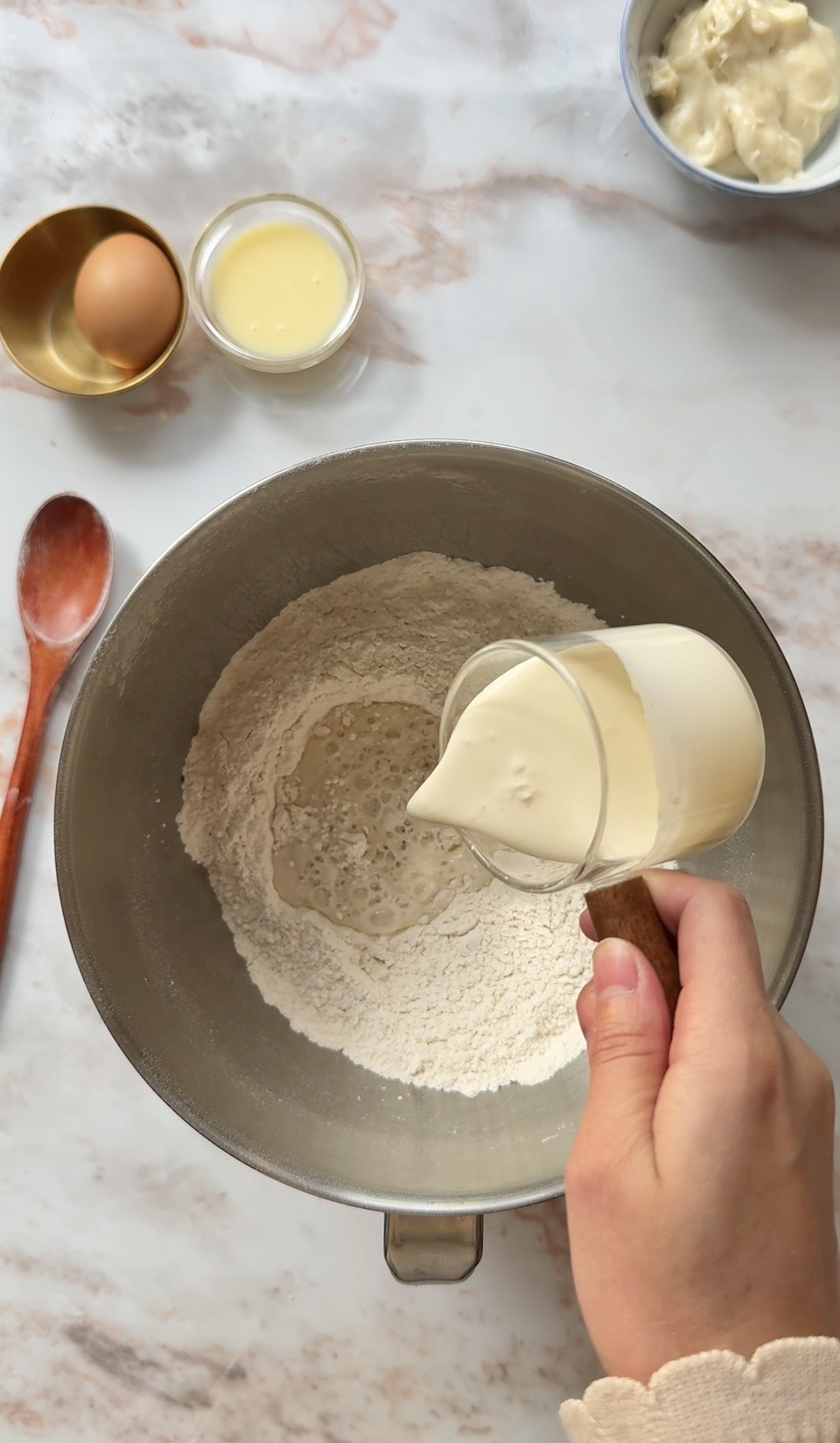
2. In the bowl of a stand mixer (or a large mixing bowl), combine the bread flour, sugar, milk powder, and yeast. Give everything a quick mix to distribute evenly. Add the milk, cream, condensed milk, egg, and all of the cooled tangzhong. Mix until a shaggy, rough dough comes together. Cover the bowl and leave to rest for 15-20 minutes, this rest period is important, it allows the flour to hydrate fully and makes kneading much easier.
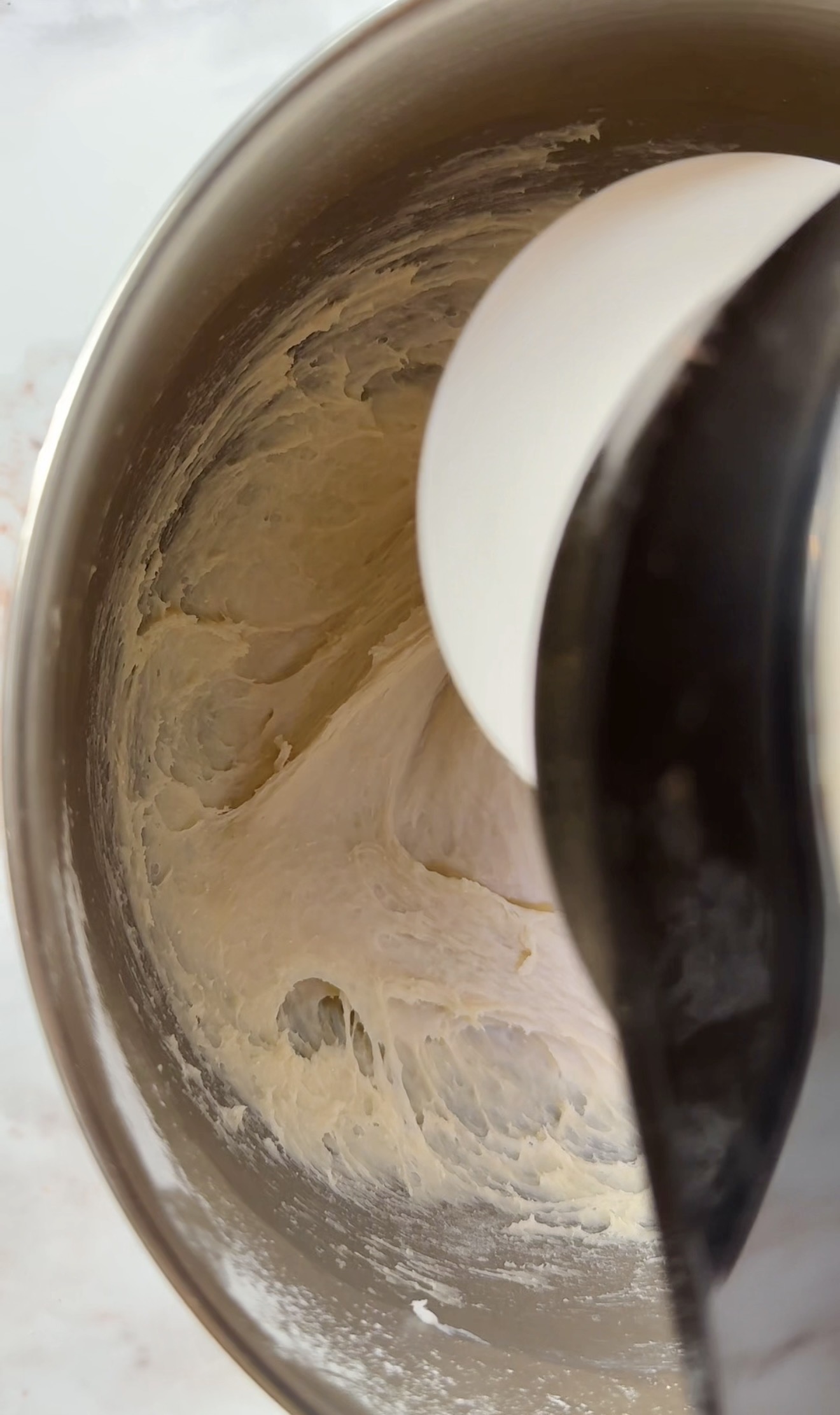
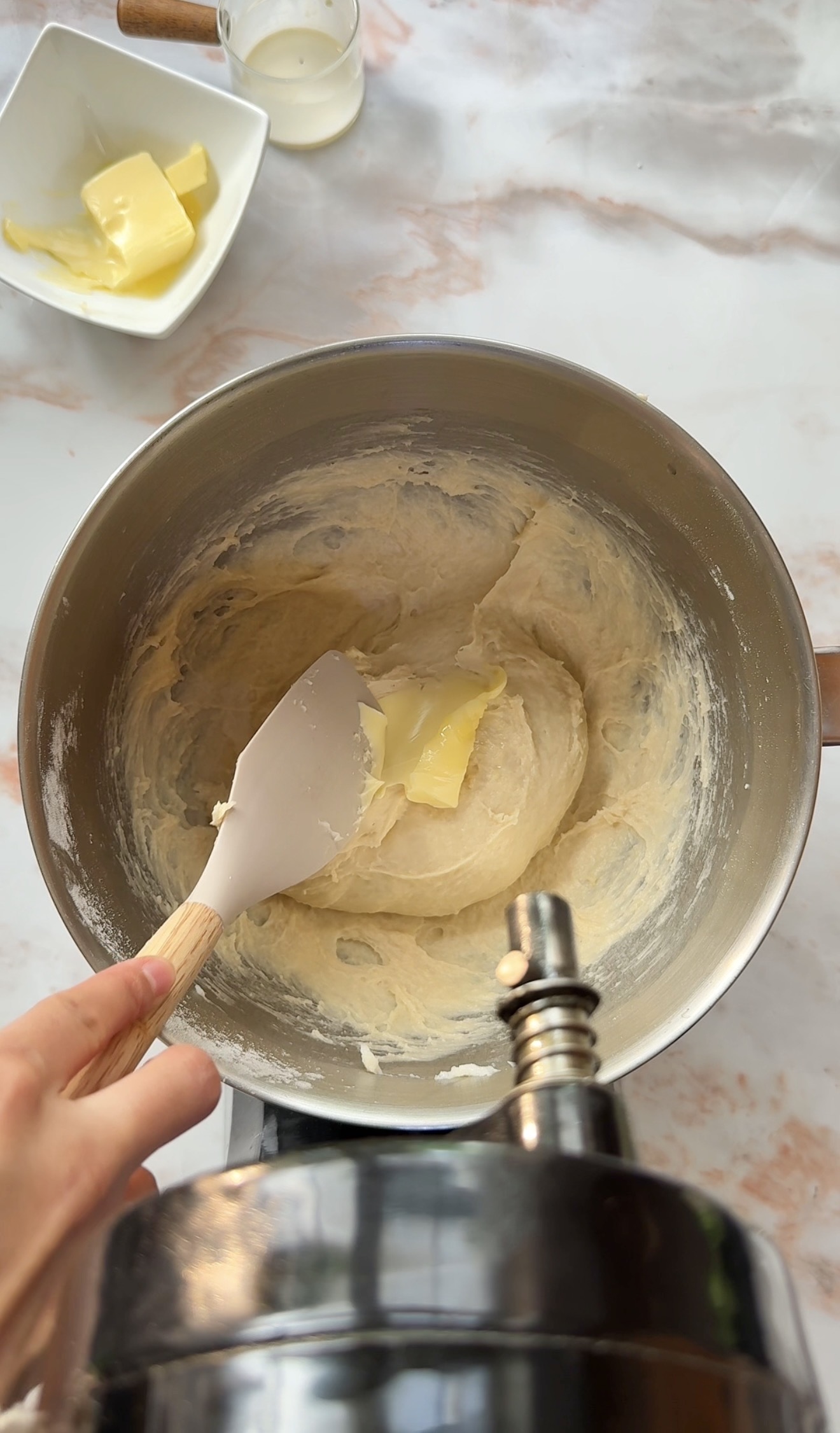
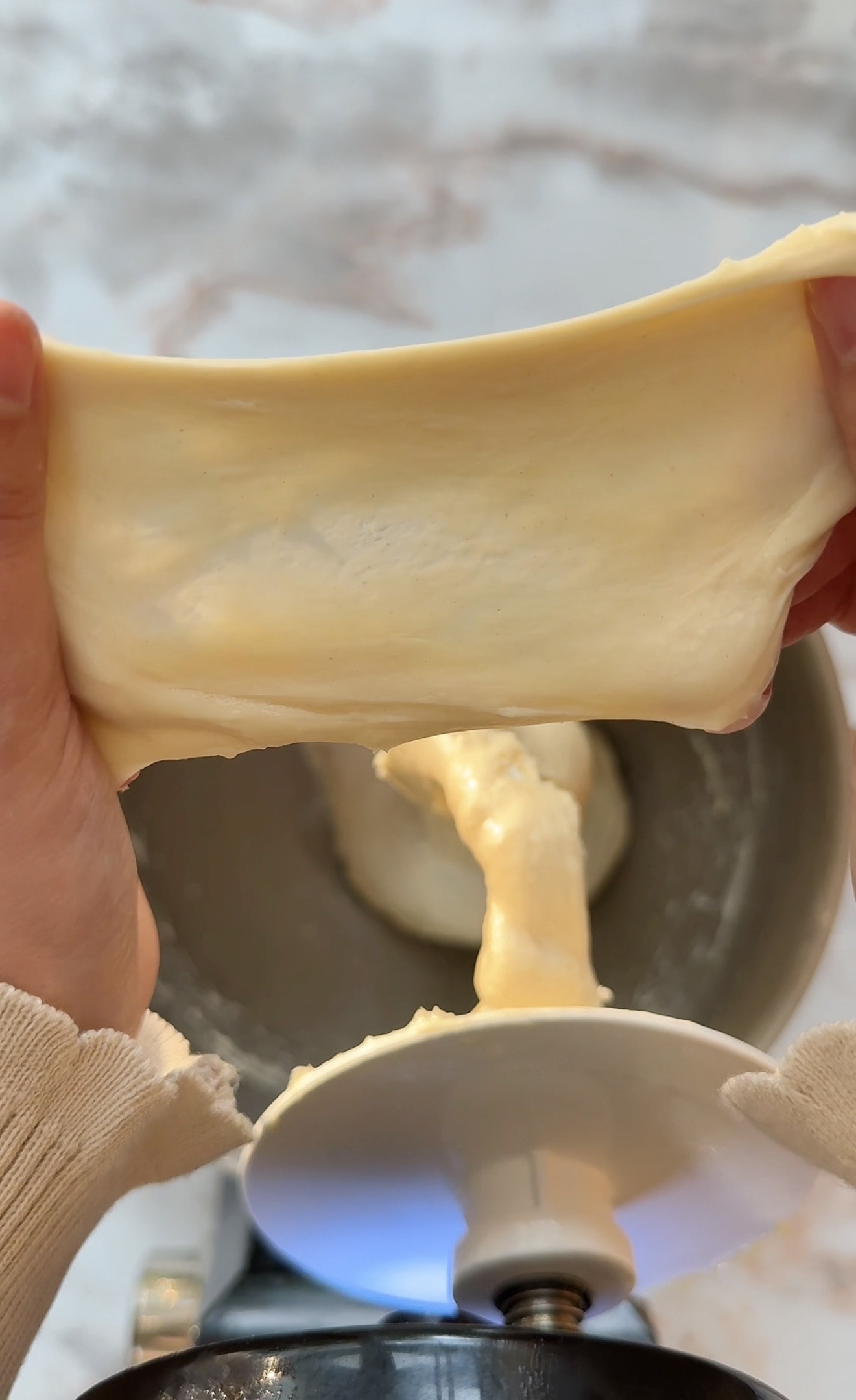
3. Add the salt to the rested dough. Begin kneading on medium speed (or by hand) for 5 minutes. Then, with the mixer running, add the softened butter a small piece at a time, waiting for each addition to be fully incorporated before adding the next. Once all the butter is in, continue kneading for 10-15 minutes until the dough is completely smooth, elastic, and passes the windowpane test, stretch a small piece between your fingers and it should be thin and translucent without tearing.
4. Shape the dough into a smooth ball and place in a lightly greased bowl. Cover with cling film and leave to proof until the dough has grown by 80-90%, not a full double, just shy of it. This takes around 60-90 minutes depending on how warm your kitchen is.
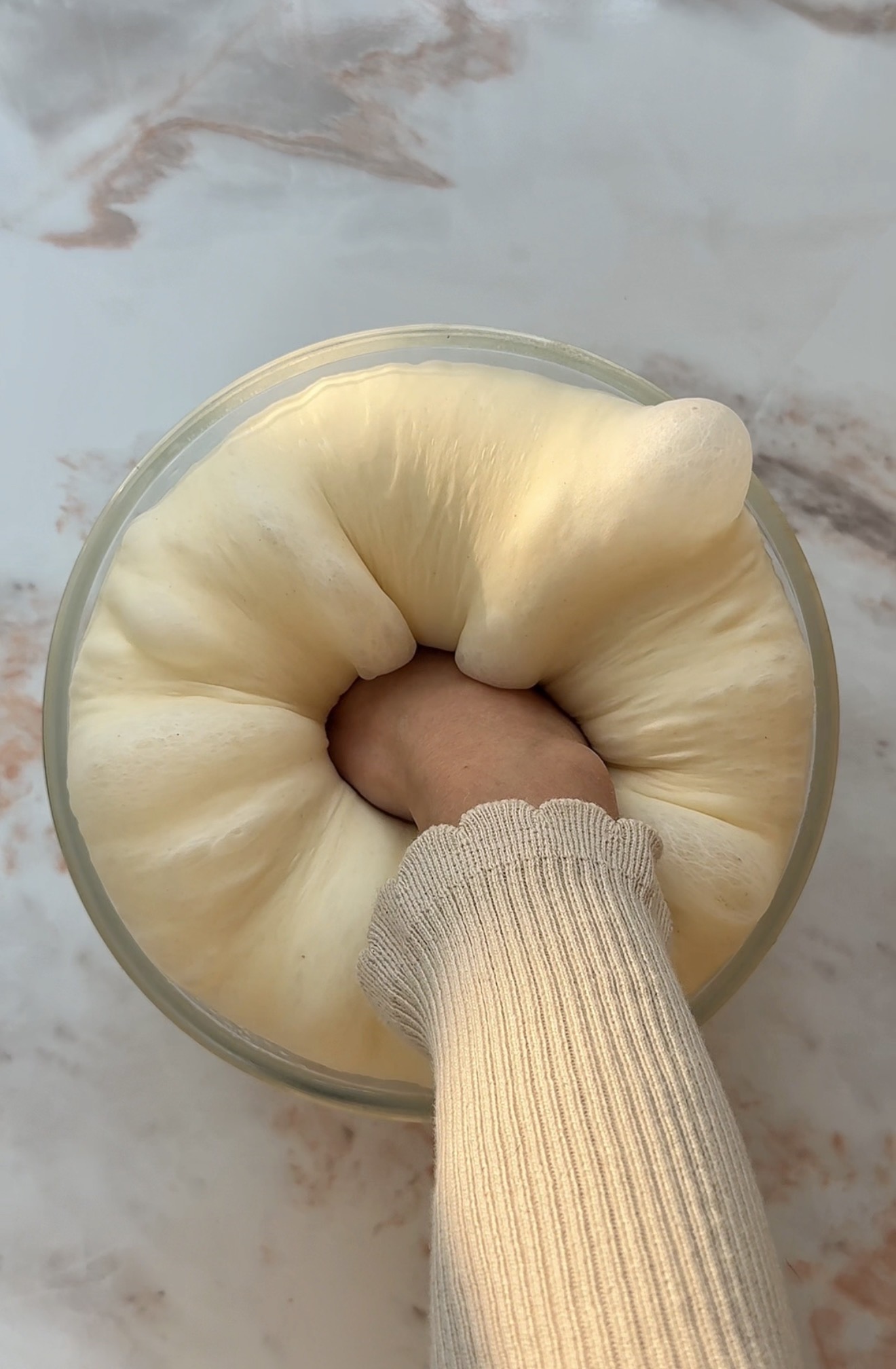
5. Once proofed, turn the dough out onto a lightly floured surface. Divide it into 9 equal pieces, aiming for 85-90g each. Roll each piece into a smooth, tight ball by cupping your hand over the dough and rolling in circular motions on the surface.
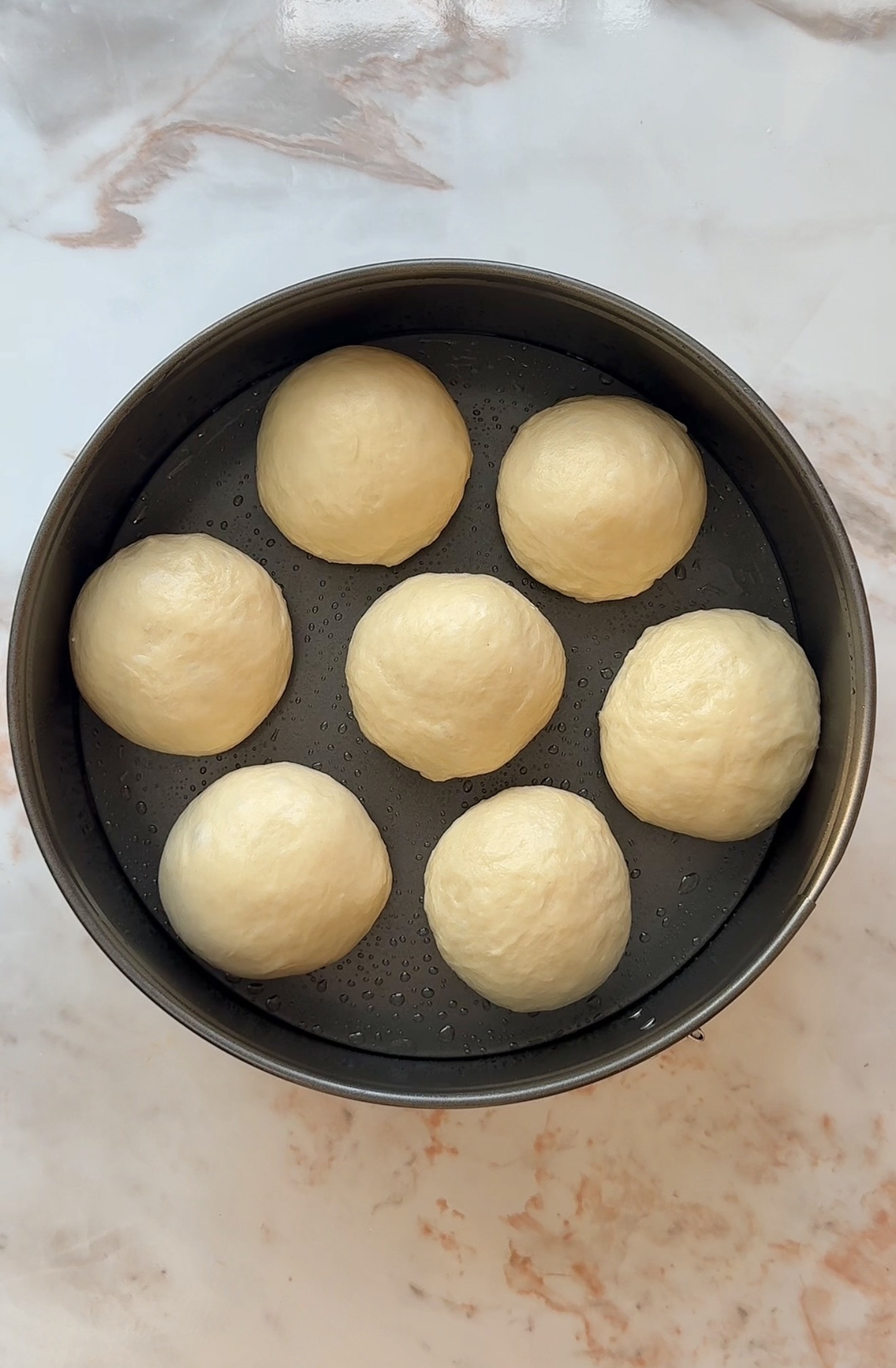
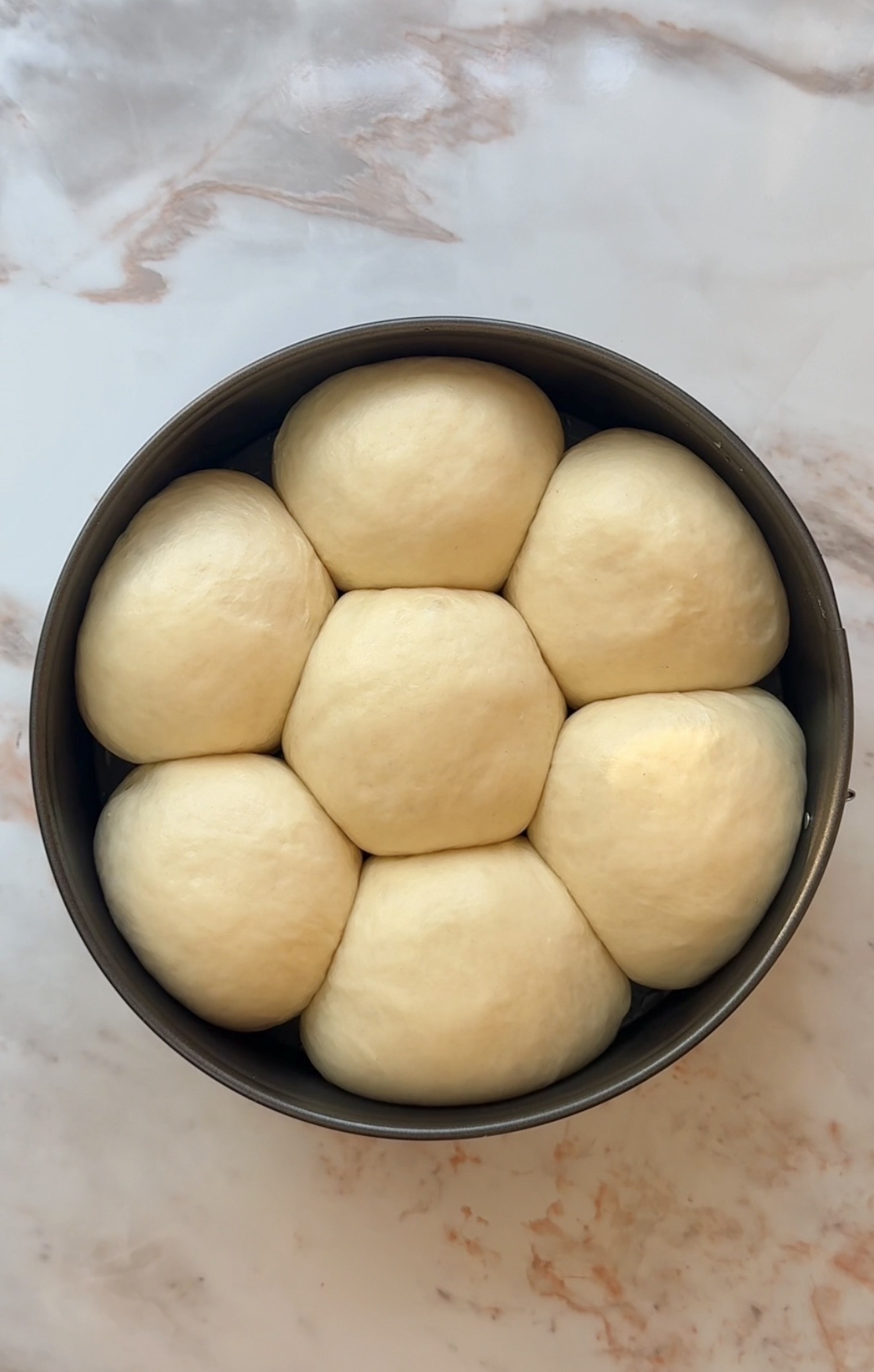
6. Place the balls into a greased 9-inch springform pan, one in the centre and eight evenly spaced around the outside. Cover loosely and leave for the final proof of 45-75 minutes, until the rolls are puffy, touching each other, and spring back slowly when gently pressed with a finger.
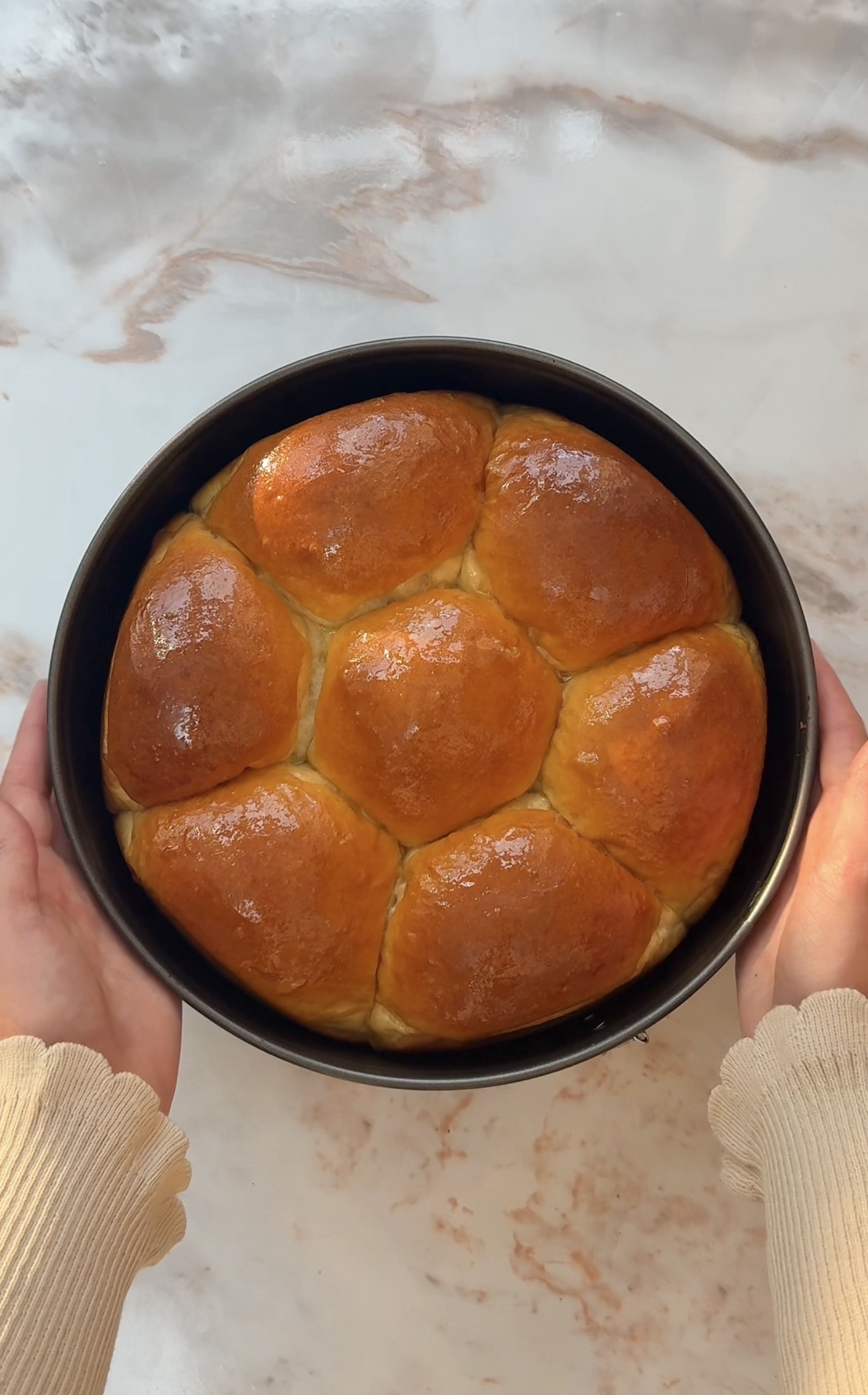
7. Preheat your oven to 175°C conventional (or 165°C fan). Brush the tops of the rolls gently with egg wash. Bake for 22-26 minutes until deeply golden on top. If the rolls start browning too quickly before the time is up, lay a sheet of foil loosely over the top and continue baking.
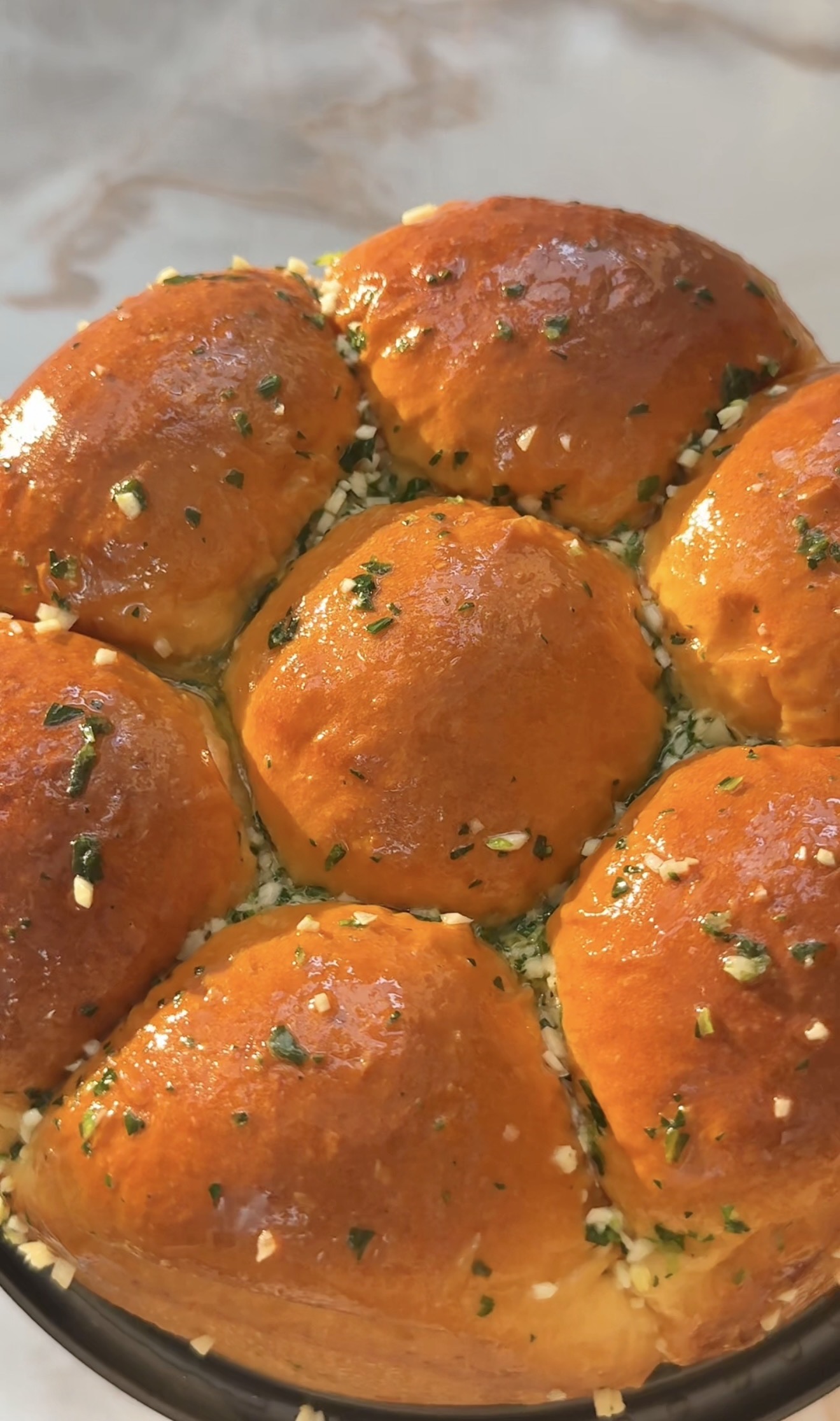
8. While the bread bakes, mix together the melted butter, finely grated garlic, chopped parsley, and salt. The moment the bread comes out of the oven, brush this garlic butter generously all over the hot rolls. It will soak straight in. Don’t hold back.
Tips for Success
- Cool the tangzhong completely before adding it to the dough. Warm tangzhong can affect the yeast activity.
- Don’t rush the windowpane test. Properly developed gluten is what gives these rolls their structure and stretch. Keep kneading until the dough genuinely passes.
- Proof to 80-90%, not full double. Japanese milk bread is traditionally slightly under-proofed compared to other breads, this gives a tighter, softer crumb.
- Use a scale for dividing. Equal portions mean even baking. Eyeballing usually results in some rolls baking faster than others.
- Garlic butter while hot. Apply it the moment the bread comes out of the oven. Hot bread absorbs it instantly, waiting even five minutes makes a difference.
Storing Your Bread
Storage: Store in an airtight bag or container at room temperature for up to 3 days. Thanks to the tangzhong, it stays softer than regular homemade bread.
Reheating: Warm in a low oven at 150°C for 5-8 minutes or microwave for 10-15 seconds. A small brush of extra butter before reheating makes them taste freshly baked again.
Freezing: Freeze baked rolls in a sealed bag for up to 1 month. Thaw at room temperature and warm before serving.
Japanese Milk Bread (Hokkaido Style)
Ingredients
Tangzhong
- 25 g bread flour
- 125 g whole milk
Dough
- 375 g bread flour bread flour gives more structure and chew than plain flour
- 25 g sugar
- 15 g milk powder
- 4 g instant yeast fast-action yeast works perfectly here
- 6 g salt add this after the initial mix not at the start with the yeast
- 140 g milk
- 60 g cream
- 35 g condensed milk
- 1 egg
- 40 g unsalted butter softened — kneaded in gradually for that classic enriched bread texture
Garlic Butter Finish
- 50 g butter melted
- 4 small garlic cloves finely grated
- 1-2 tsp fresh parsley chopped
- Pinch of salt
Instructions
- Start with the tangzhong. In a small saucepan over low heat, whisk together the 25g bread flour and 125g whole milk until no lumps remain. Cook, stirring constantly, until the mixture thickens into a smooth, pudding-like paste. This takes about 3-5 minutes on low heat. Remove from the heat and set aside to cool completely before using.
- In the bowl of a stand mixer (or a large mixing bowl), combine the bread flour, sugar, milk powder, and yeast. Give everything a quick mix to distribute evenly. Add the milk, cream, condensed milk, egg, and all of the cooled tangzhong. Mix until a shaggy, rough dough comes together. Cover the bowl and leave to rest for 15-20 minutes — this rest period is important, it allows the flour to hydrate fully and makes kneading much easier.
- Add the salt to the rested dough. Begin kneading on medium speed (or by hand) for 5 minutes. Then, with the mixer running, add the softened butter a small piece at a time, waiting for each addition to be fully incorporated before adding the next. Once all the butter is in, continue kneading for 10-15 minutes until the dough is completely smooth, elastic, and passes the windowpane test — stretch a small piece between your fingers and it should be thin and translucent without tearing.
- Shape the dough into a smooth ball and place in a lightly greased bowl. Cover with cling film and leave to proof until the dough has grown by 80-90% — not a full double, just shy of it. This takes around 60-90 minutes depending on how warm your kitchen is.
- Once proofed, turn the dough out onto a lightly floured surface. Divide it into 9 equal pieces, aiming for 85-90g each — a kitchen scale makes this much easier. Roll each piece into a smooth, tight ball by cupping your hand over the dough and rolling in circular motions on the surface.
- Place the balls into a greased 9-inch springform pan — one in the centre and eight evenly spaced around the outside. Cover loosely and leave for the final proof of 45-75 minutes, until the rolls are puffy, touching each other, and spring back slowly when gently pressed with a finger.
- Preheat your oven to 175°C conventional (or 165°C fan). Brush the tops of the rolls gently with egg wash. Bake for 22-26 minutes until deeply golden on top. If the rolls start browning too quickly before the time is up, lay a sheet of foil loosely over the top and continue baking.
- While the bread bakes, mix together the melted butter, finely grated garlic, chopped parsley, and salt. The moment the bread comes out of the oven, brush this garlic butter generously all over the hot rolls. It will soak straight in. Don't hold back.